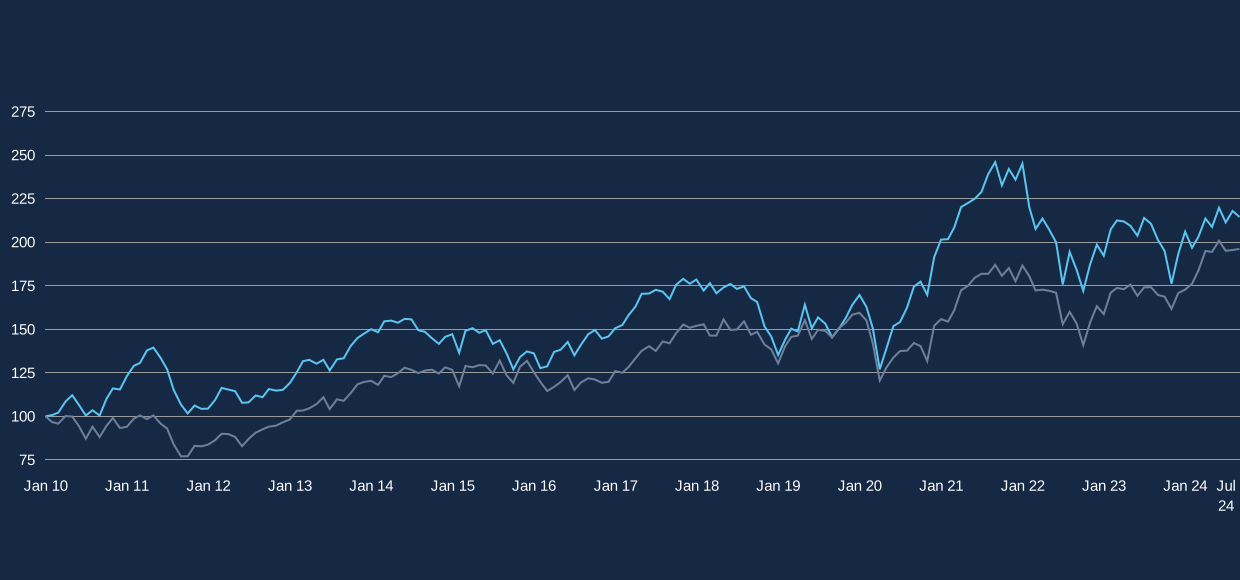
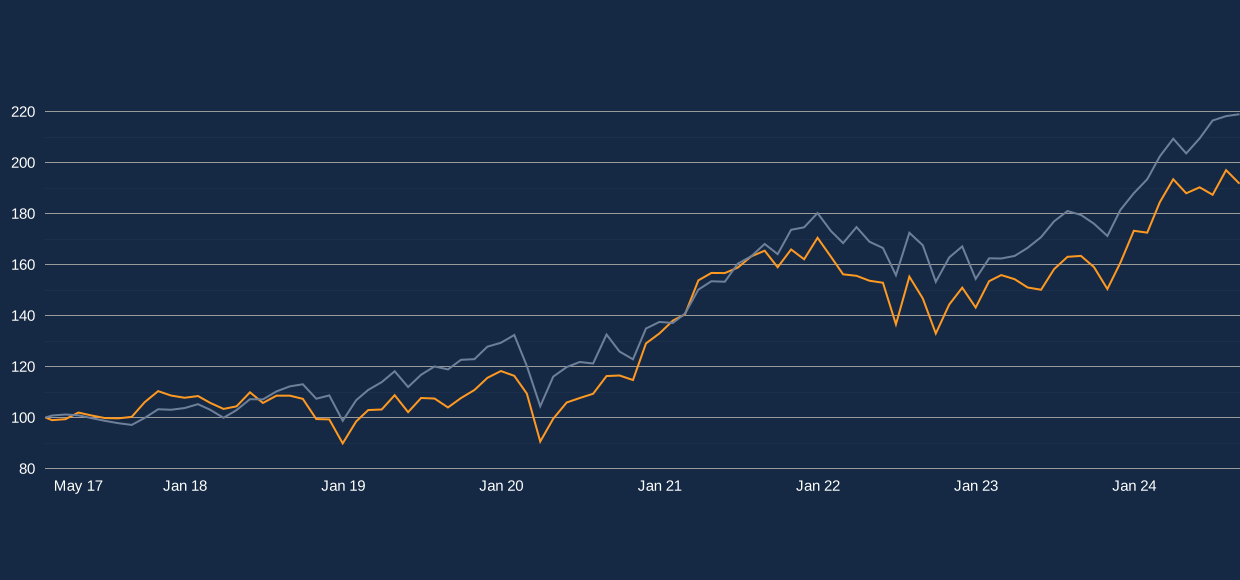
Impact investment is an investment strategy that aims to achieve positive social and ecological effects (impact) in addition to financial returns. The focus is on investing capital in projects, companies or organizations that bring about measurable, sustainable change in areas such as education, health, clean energy or social justice. Unlike traditional investments, impact investments aim to make an active and measurable improvement in the world while generating a financial return.
The added value of ESG is that ESG serves as a set of criteria to minimize risks and promote sustainable investments. ESG criteria help investors to evaluate companies based on their environmental and social practices as well as their governance. However, they focus primarily on the avoidance of negative effects and risk management.
Impact investment, on the other hand, goes one step further: it not only aims to avoid negative effects, but also to proactively bring about positive change. The social or ecological effect is a key objective here, while ESG often focuses on financial performance while taking ethical standards into account. Impact investments measure actual social or environmental benefits, while ESG offers a broader assessment of corporate practices without necessarily having the same depth of targeted impact.
Impact Investment
The Carnot Capital Impact Funds
Carnot Capital analyzes the impact of companies in the world based on their strategy, products, R&D activities and financial performance indicators, which are also a prerequisite for sustainable impact.
Carnot Capital funds therefore go much further than ESG funds, which are limited to assessing the processes within companies. Carnot Capital assesses and measures impact in line with the UN’s Sustainable Development Goals.
Important criteria include the company’s strategy, the impact of its products in the world and the company’s innovative strength. We also assess the economic benefit of the products and good profitability of the company as prerequisites for a positive impact to be sustainable.
The Carnot Capital funds are based on the 3 pillars of impact analysis:
1
ESG Values
Exclusion criteria
Environmental friendliness
Social aspects
Good management
2
Impact Values
Products with a positive effect
Negative effects
Compliance with UN principle
3
Capital Carnot Values
Quality philosophy
Economic efficiency of the products
Corporate strategy
Innovative strength
Management incentives
Double Bottom Line
Financial Return & Positive Effect
At Carnot Capital, we pursue a “double bottom line” investment strategy that seeks to achieve superior venture capital returns while promoting social, environmental and economic improvement. Carnot Capital invests in high-growth companies that are both market leaders and positive contributors to the community.
Financial Return
The monetary return on impact investment.
Positive Effect
The targeted achievement of positive social or ecological goals.
Access to energy is crucial for the achievement of many sustainable development goals, such as poverty reduction, health improvement and economic development. SDG Goal 7 therefore aims to ensure global access to affordable and sustainable energy services, increase the share of renewable energy and improve energy efficiency.
Over 200 million people worldwide, especially young people, are unemployed, which is why SDG Goal 8 calls for sustainable economic growth and the creation of decent jobs. The aim is to combat forced labor, end modern slavery and decouple economic growth from environmental degradation in order to improve resource efficiency.
SDG goal 9 promotes the development of resilient infrastructure and sustainable industrialization in order to increase economic growth, jobs and prosperity. To this end, resources are to be used more efficiently by 2030, clean technologies promoted and access to financial services and markets improved for small businesses, particularly in developing countries.
Urbanization, which will see up to 70% of the world’s population living in cities by 2050, is driving the global economy but causing significant environmental impacts. SDG 11 therefore aims to reduce per capita environmental impact and make cities more inclusive, sustainable and safe, in particular through better urban planning, access to green spaces and affordable housing.
Climate change threatens livelihoods in less developed regions as well as infrastructure in developed countries, and its impacts affect ecosystems and economies globally. SDG 13 calls on countries to integrate climate action, strengthen international cooperation and increase resilience to climate-related disasters, including a pledge to provide 100 billion dollars annually by 2020 to support developing countries.
Carnot Capital assesses the social and environmental performance of the companies in the portfolio using specific metrics and indicators aligned with SDGs 7, 8, 9, 11 and 13. The impact of the companies’ trade, products and developments are analyzed and evaluated.
Impact Investment
Why Invest in Carnot Capital Funds
Founder Led since 2007
Long-term thinking
Strong commitment
Track Record
For 19 years Unique industry expertise & impact knowledge
Impact
Pioneer in impact investing in listed equities
Continuous measurement of positive impact based on SDGs
Performance
Above-average returns
Fund
Interactive Impact Heatmap
Carnot Capital assesses and measures the impact along the UN’s sustainable development goals and presents these results in a heat map: